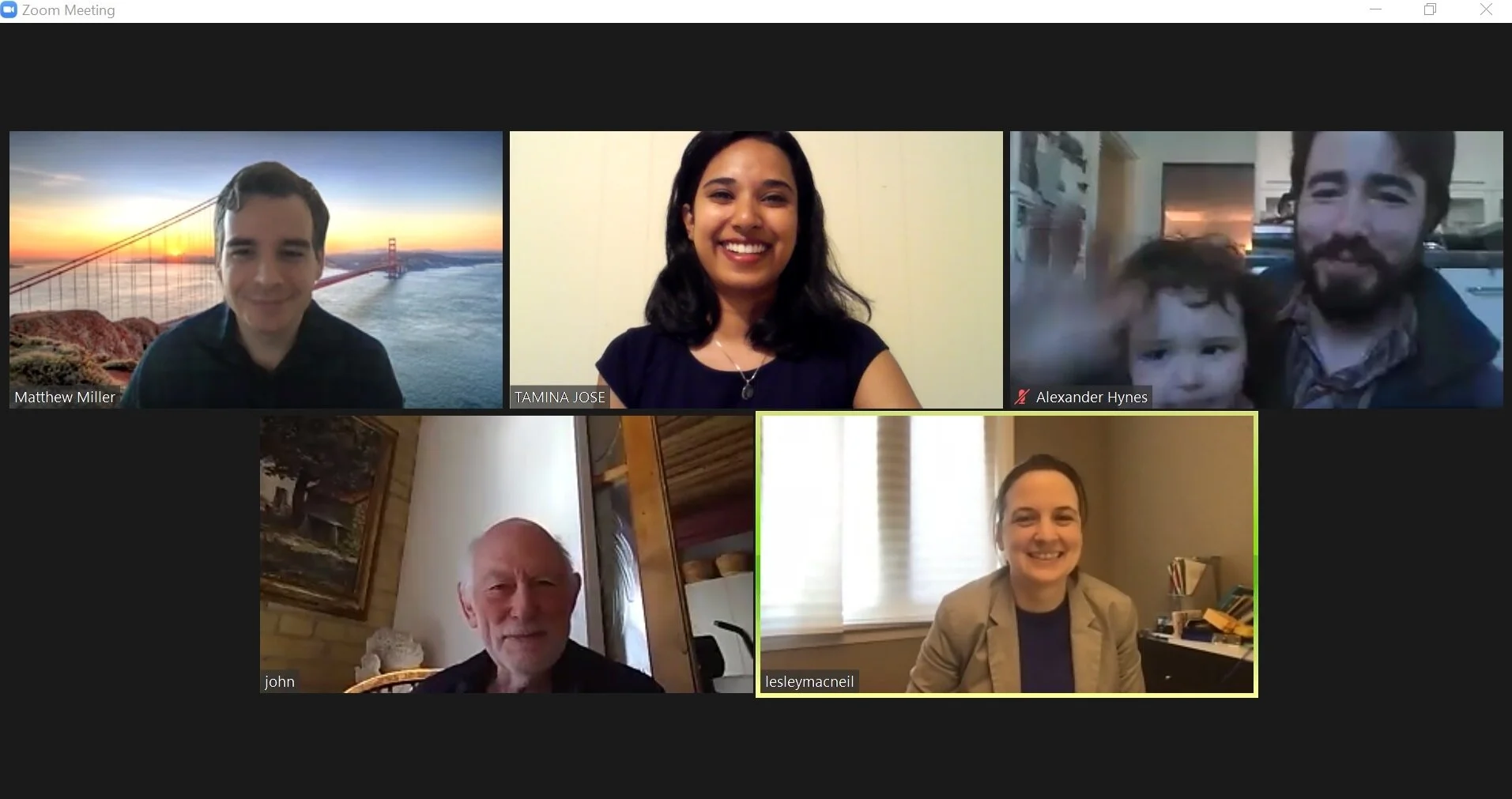
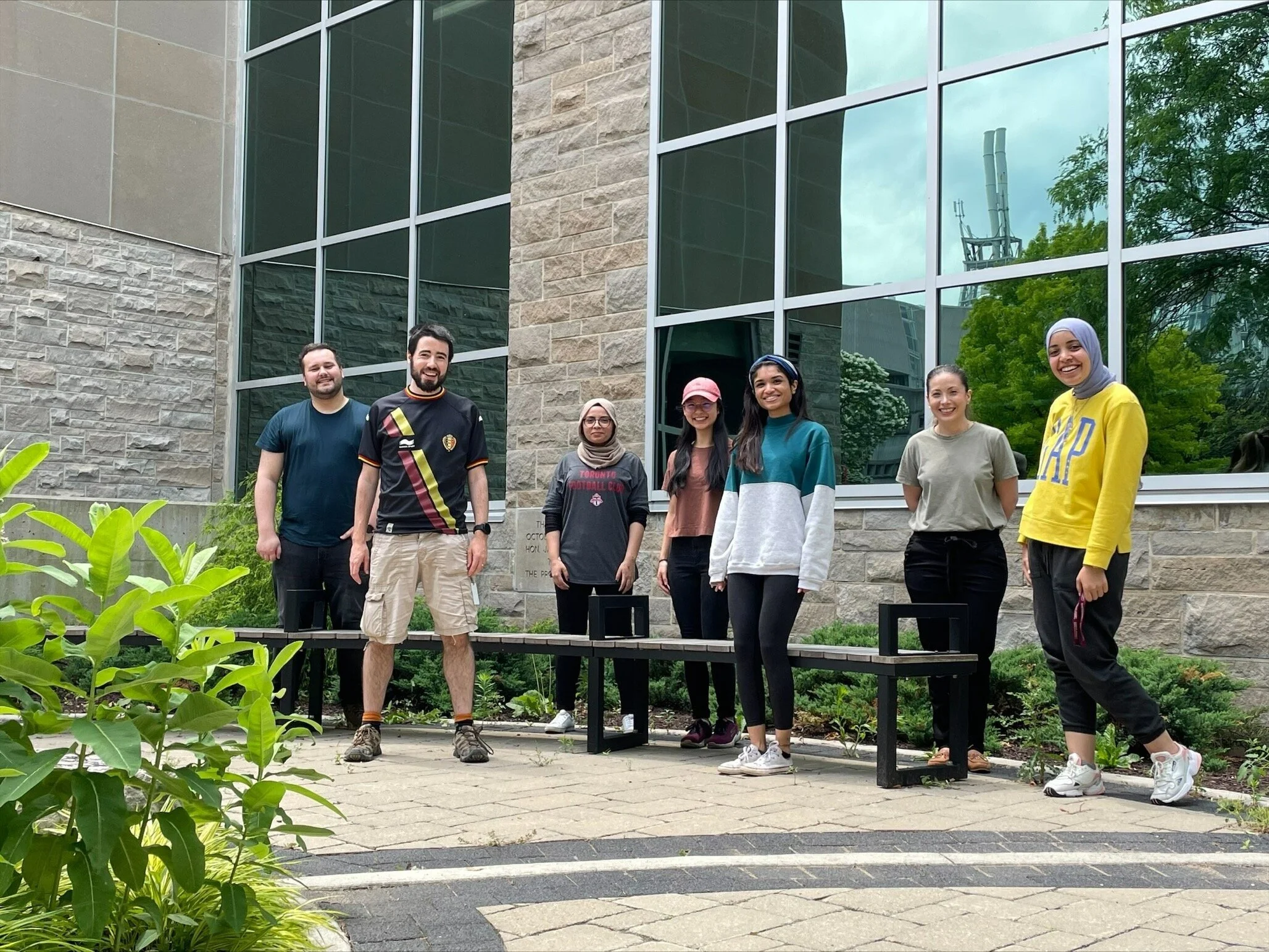
Usually, on lab cleanup day I sing the praises of a cleanup, thank everyone for their hard work (and it is hard! There is scrubbing on hands and knees), and show a before-and-after pic - but today, the highlight is that between our two shifts, we managed to get almost everyone in the lab in one place and have lunch together.
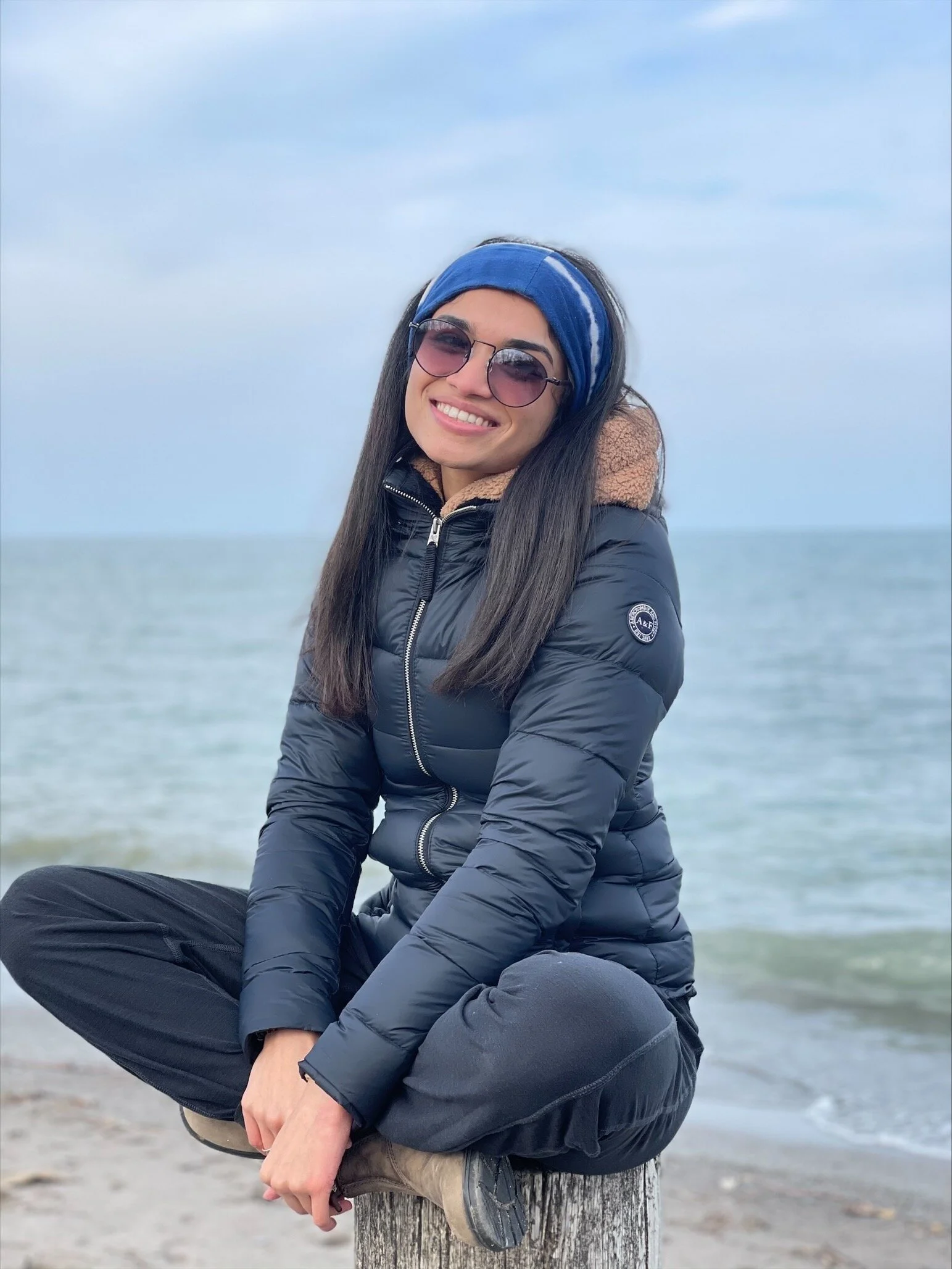
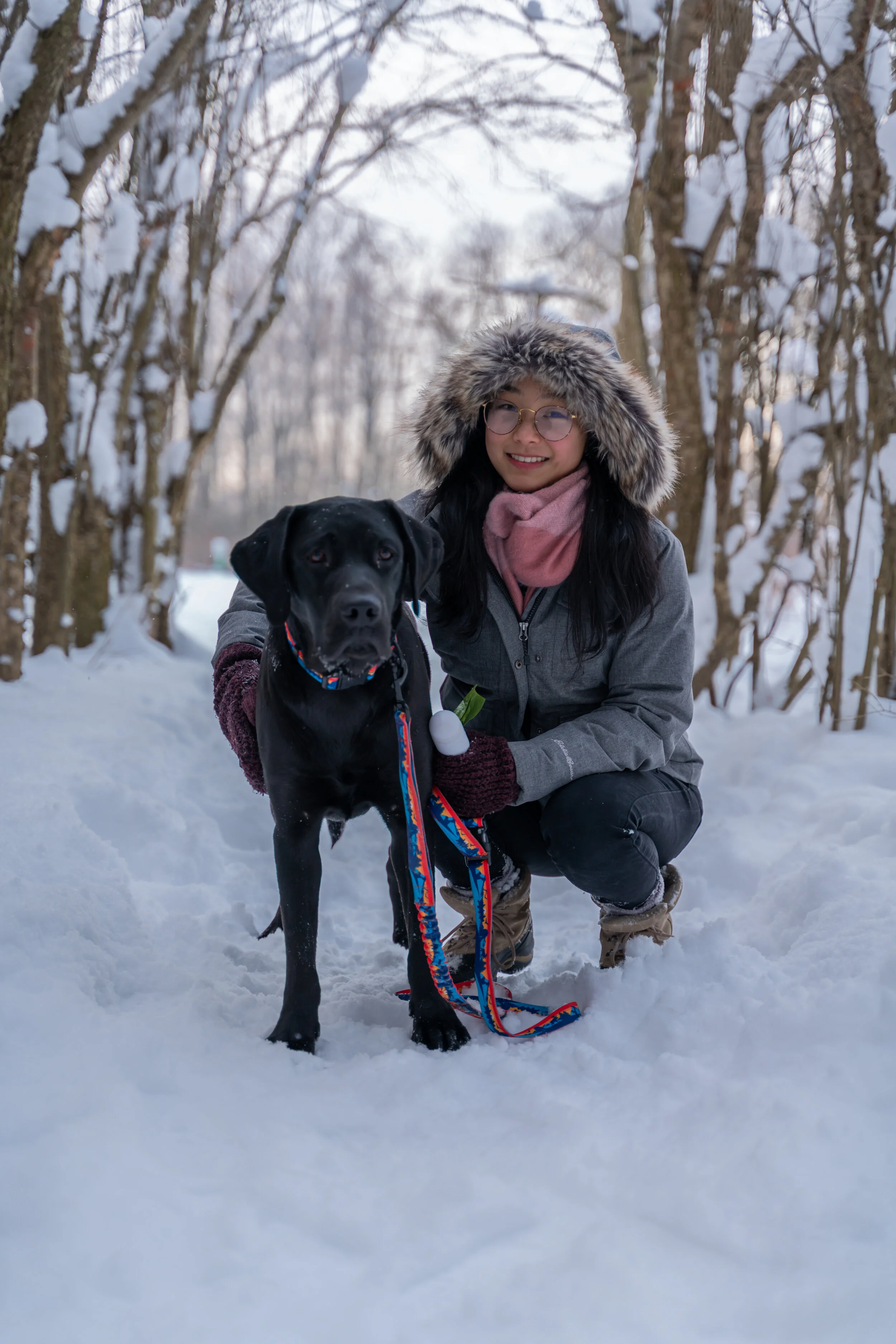
Gayatri was just awarded a prestigious Farncombe Studentship to support her upcoming PhD start in the fall, extendible up to 3 years. She’s off to a flying start! I asked her for a recent picture, and she sent me this - in a coat. When the forecast for the next 4 days is above 30 degrees. I guess all of 2021 is ‘recent’.
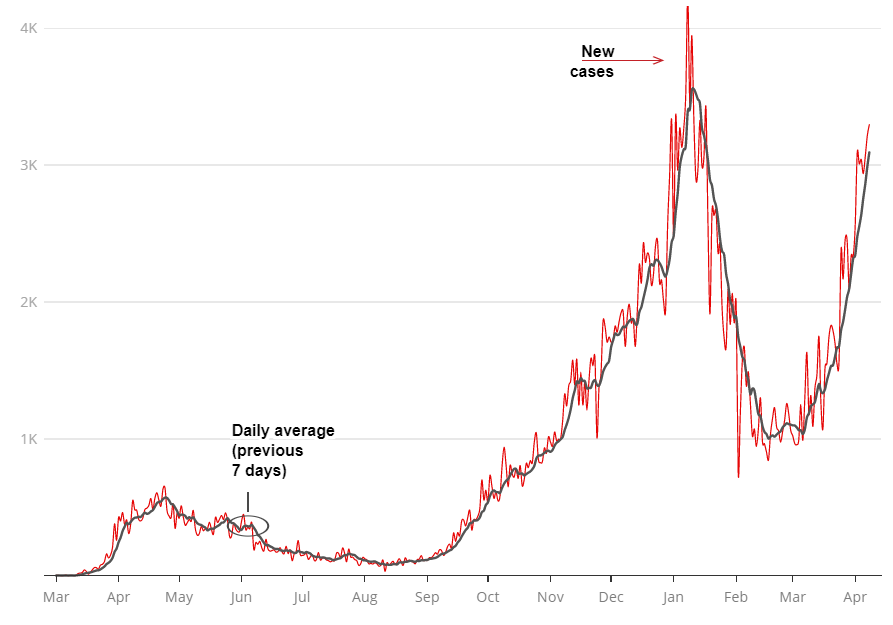
With case numbers down below 1000/day, we re-opened the lab to limited (5 person) capacity - lifting a lockdown I had implemented to coincide with the provincial stay-at-home order. The team was definitely chomping at the bit to get back in the lab! Now to see if I can find us some filter tips….
In keeping with the alliterations of the last few updates, we’ve published a paper. This is the first research paper from the lab and to say I’m ecstatic would be an understatement. I won’t dig into the paper itself - I just want to highlight how critical the contributions of the authors was here. First, I did not think this was going to be our first paper - it wasn’t even on my radar when I came to McMaster - Rabia and Amany worked bloody hard to move this along quickly! Second, I was convinced we had to do short, 1.5-2 h assays to avoid confounding regrowth - it was thanks to Amany’s insistence and hard work that we wound up with the impressive eradication.

Al-Anany AM, Fatima R, Hynes AP. 2021. Temperate phage-antibiotic synergy eradicates bacteria through depletion of lysogens. Cell Reports 35(8):109172
Boy, there's a lot to celebrate this week - yet again! Wednesday and Thursday were the Faculty of Health Sciences Plenary, and Rabia, Janice, Amany and Tamina put together amazing talks in the restrictive Pecha Kucha format. I was blown away - I honestly thought we’d wind up with 2/3s of the finalists being from our lab! Amany's stellar performance was selected in the top 3, and she got to share a story that will be published later next week (more on that Tuesday the 25th!).
To top it off, Janice was awarded an Outstanding Achievement Award, Alejandra received the PDF Leadership Award. Wow.
It’s a delight to have former students keep me in the loop well after they leave the lab; this week we learned that Neeloufar was accepted to Medical School in Toronto, and that Hiba secured an extremely prestigious (seriously, I’m jealous - don’t look them up) Marie Skłodowska-Curie ESR fellowship to pursue a PhD at University College Cork, starting in September. Which is why the Shamrocks aren’t just a whimsical spring image.
As usual, I’m going to take partial credit for my student’s accomplishments, however unjust that may be.
I’ve recently been bemoaning the inability to adequately celebrate the many accomplishments of the lab and lab members. It turns out that, left to their own devices, the team can take care of themselves; see the celebratory cake. Today we’re celebrating Rabia’s NSERC-CGS-D - a major scholarship. Soon, soon my students won’t have to bake their own cakes.
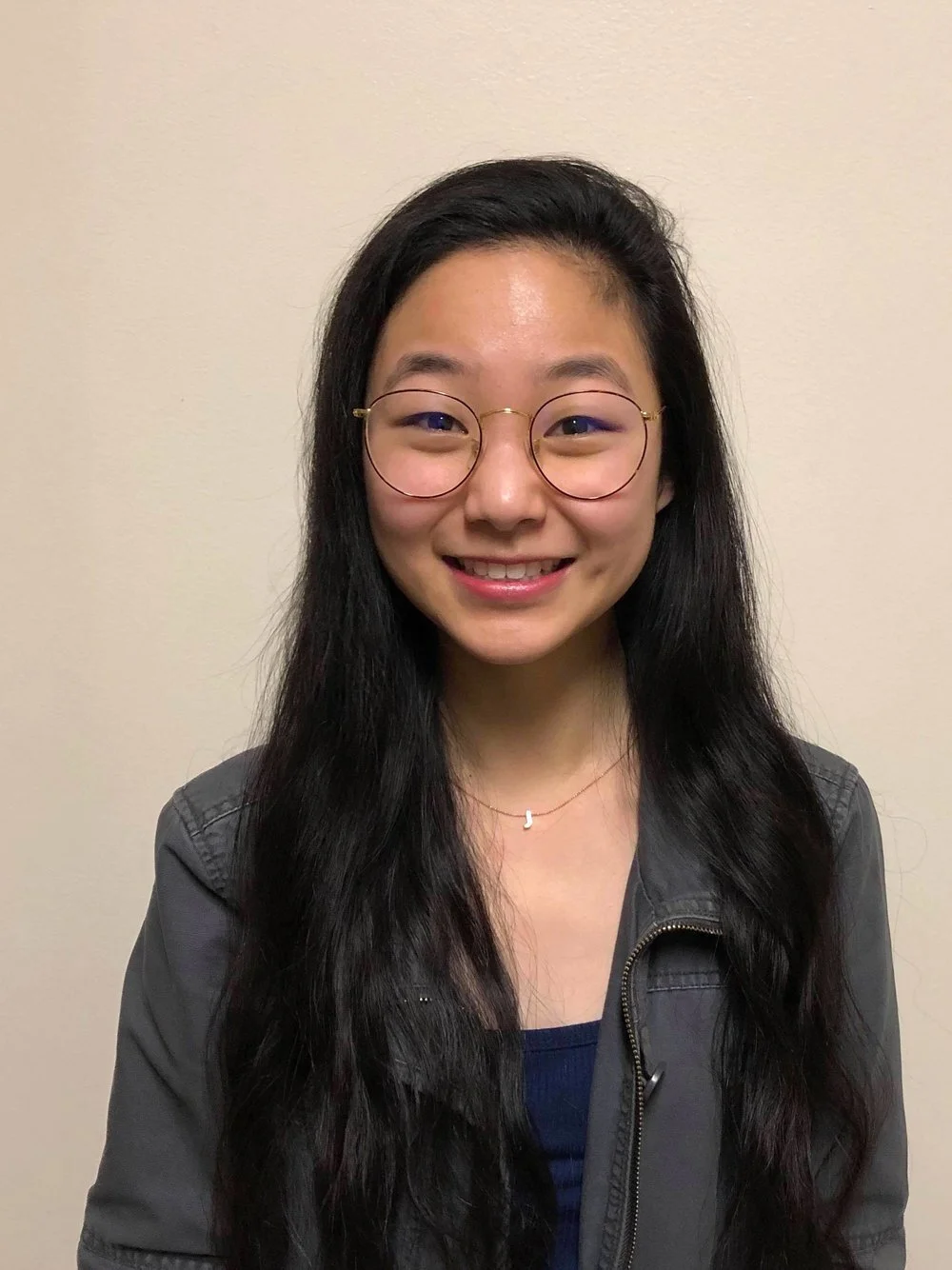
The lab may be shut down for a(nother) stint, but there are still exciting developments to celebrate! Last week, Janice was awarded an NSERC CGS-M - fantastic! And when I asked her for a picture to use, she sent this one, and it hit me that as an undergraduate she had a ‘wall of dogs’ (pictures) in her room in residence, and as a graduate student, she’s had actual dogs. Clearly, graduate school is where dreams come true.
With the recent Stay-at-Home order in Ontario, I made the decision to shut down the lab for the next four weeks. If I said it was a difficult decision, I’d be lying - it’s a painful one, sure, but it was easy to make: things are getting bad out there.
My decision is no indictment of McMaster’s current research restrictions - every lab is different, and my comfort level with our shared space, location in the hospital, number of commuters on public transit, and other factors influenced my decision to impose restrictions beyond those in force on Campus.
We’ll see you all in four weeks. (Img: CBC, via PHO)
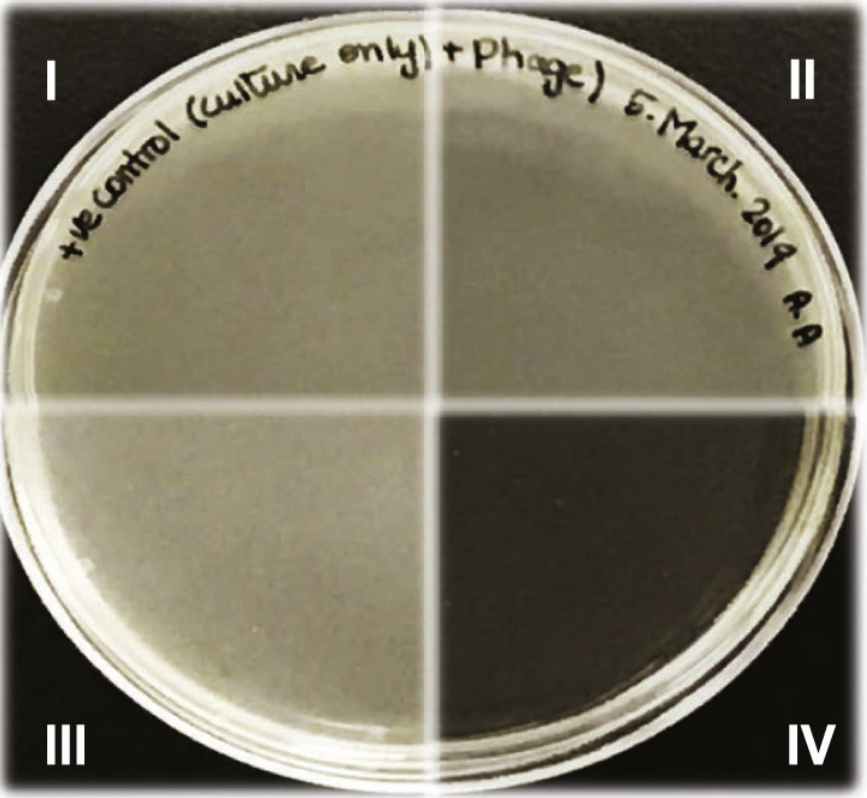
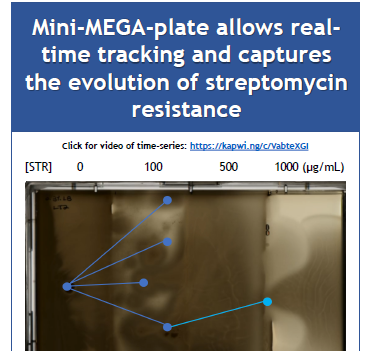
At this week’s McMaster Biochemistry Graduate Student Research Symposium (BBSRS), 5 of the team presented in some form or another - but the lab distinguished itself as both Alejandra and Janice won prizes for being best in their categories (oral PDF, Poster., respectively). The image below is a central panel in Janice’s poster - I learned from Michael Baym this week they were initially called “OMG” plates. Guess they still have that wow factor!
Last week, Tamina passed her Candidacy exam. Stressful at the best of times, I think it is even more stressful when you are being judged by 2-3 children under 6 as well as the usual panel of examiners. Well done, Tamina!
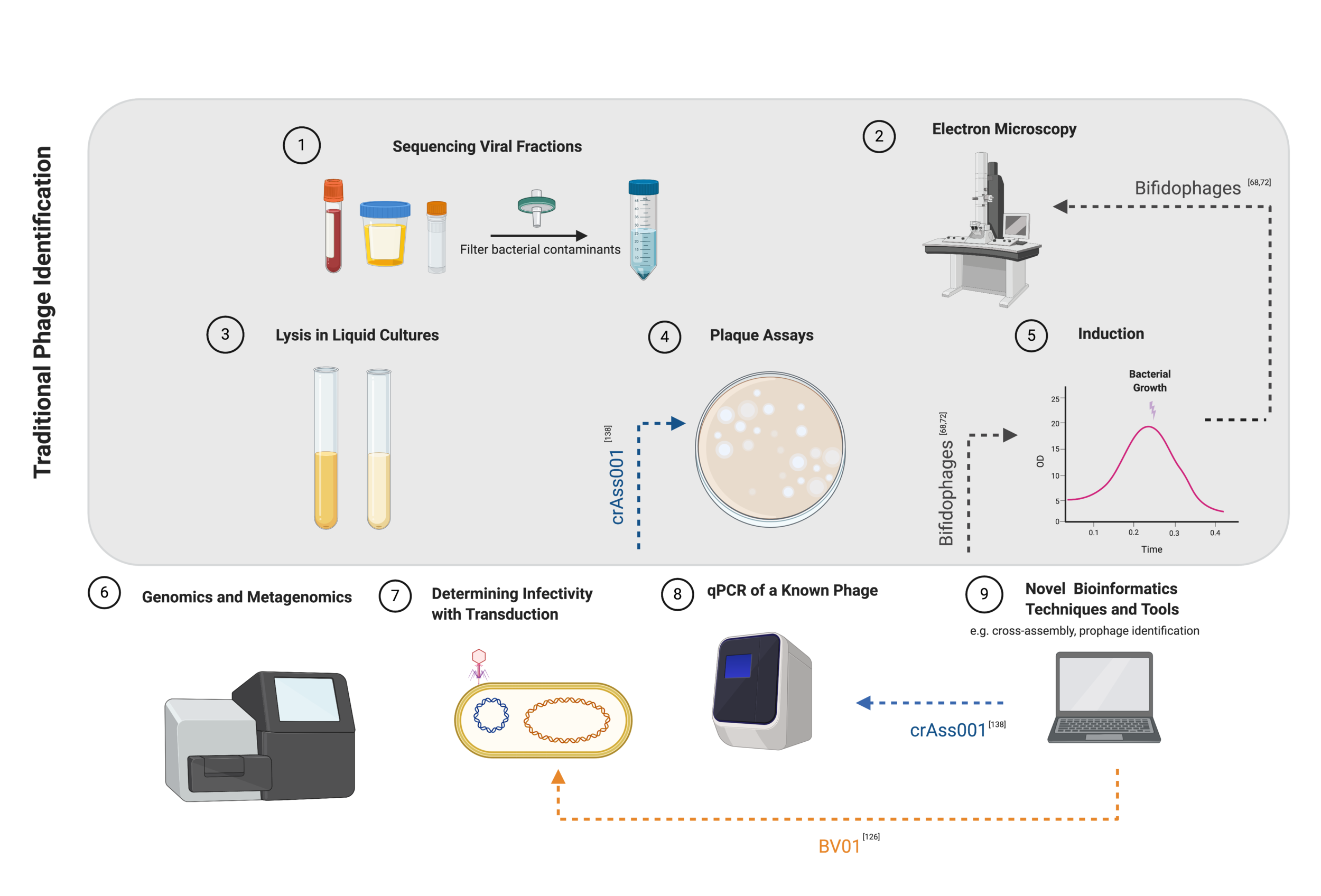
If the title catches your eye, hopefully our latest review will as well. Not only is it a great summary of where things are right now in the field, I think it also builds a strong case for how we could (and should) look at phages (even of aerobes) differently, and dig a little deeper to find the phages that lie just beyond the low-hanging fruit of the highly virulent phages.
Hiba did a fantastic job on this one, putting this all together mid-pandemic with a supervisor on parental leave.
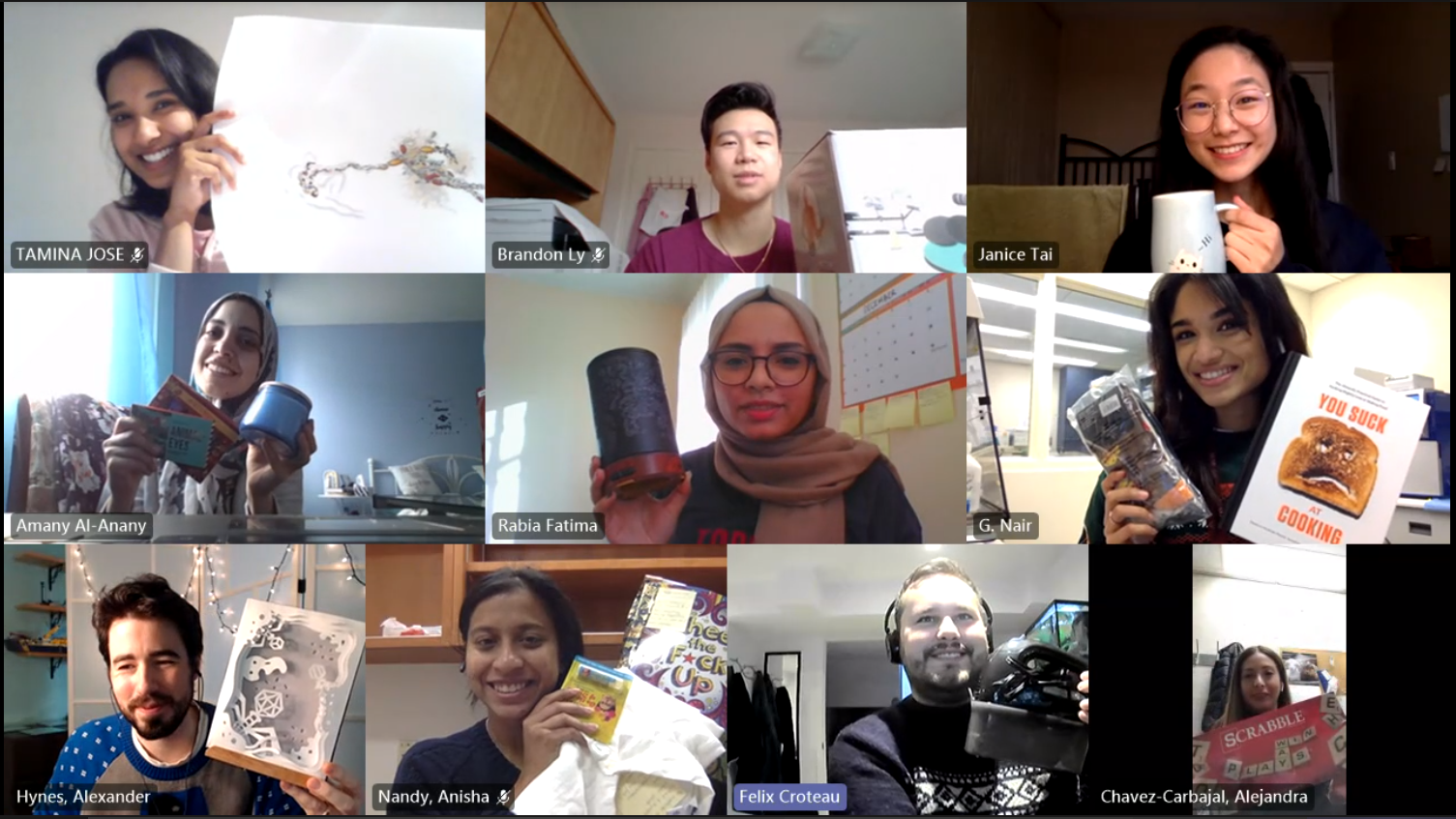
We managed our annual secret santa despite the logistical challenges, and had an absoolute blast! In addition, I forced everyone to share what they were proud of in 2020, and it was a testimony to the team what a wonderful variety of personal milestones and accomplishments people had to look back on with pride.
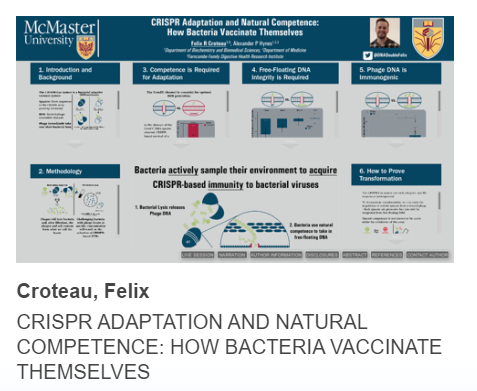
Congratulations to Félix, who won the award for best PhD Poster at this year’s IIDR. He did an excellent job, and helped others in the lab navigate this new online poster format. Although he did whine just a wee bit about the platform at lab meeting. Clearly, he managed to power through his reservations and highlight his fantastic work.
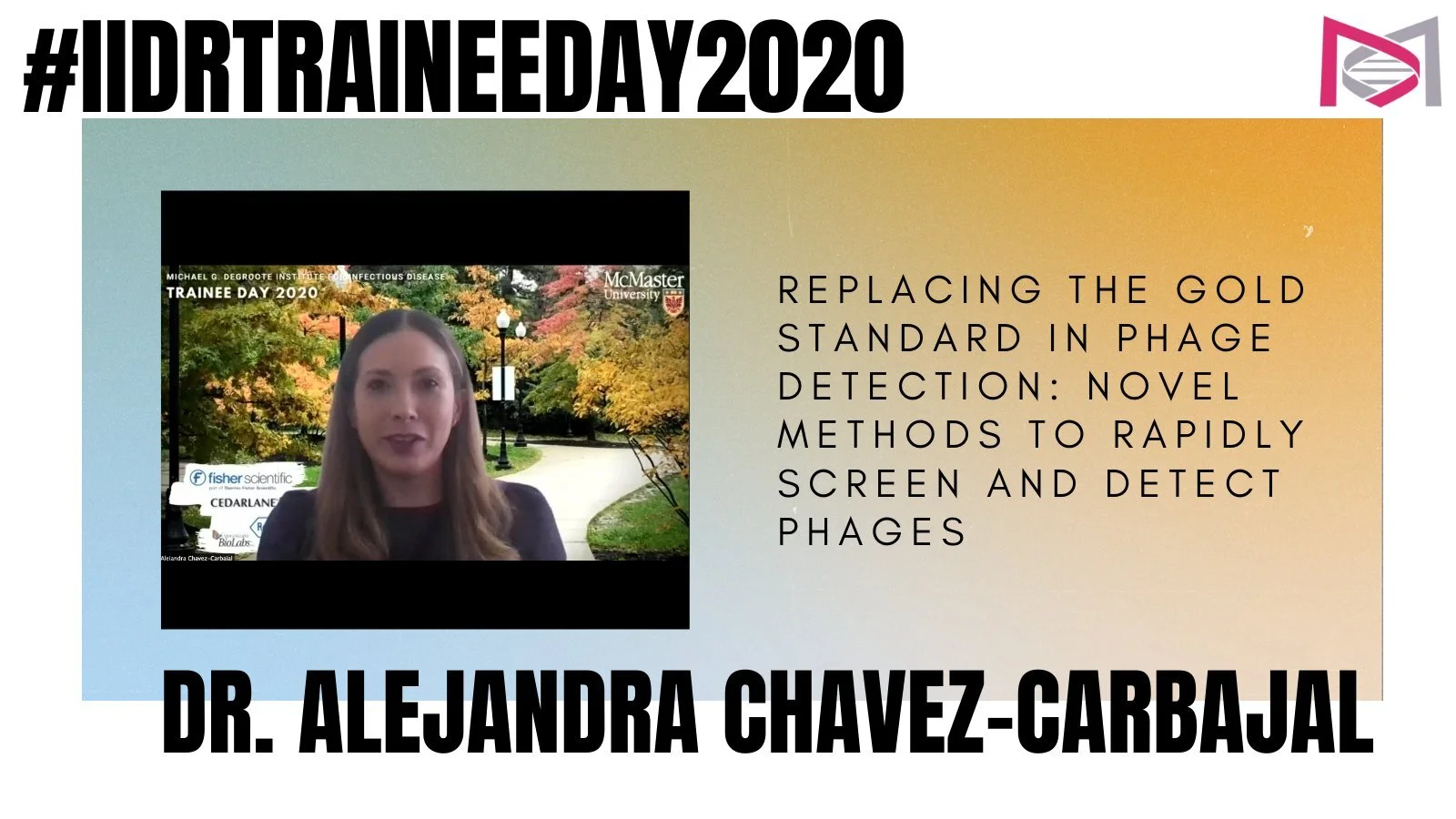
In recognition of amazing efforts in the field of infectious disease research, the IIDR awarded Dr. Chavez-Carbajal this year’s Mildred Gulliver Postdoctoral award. It was the first time we presented the second half of this story, and even knowing the whole thing, the data still get me excited. Well done, Alejandra!
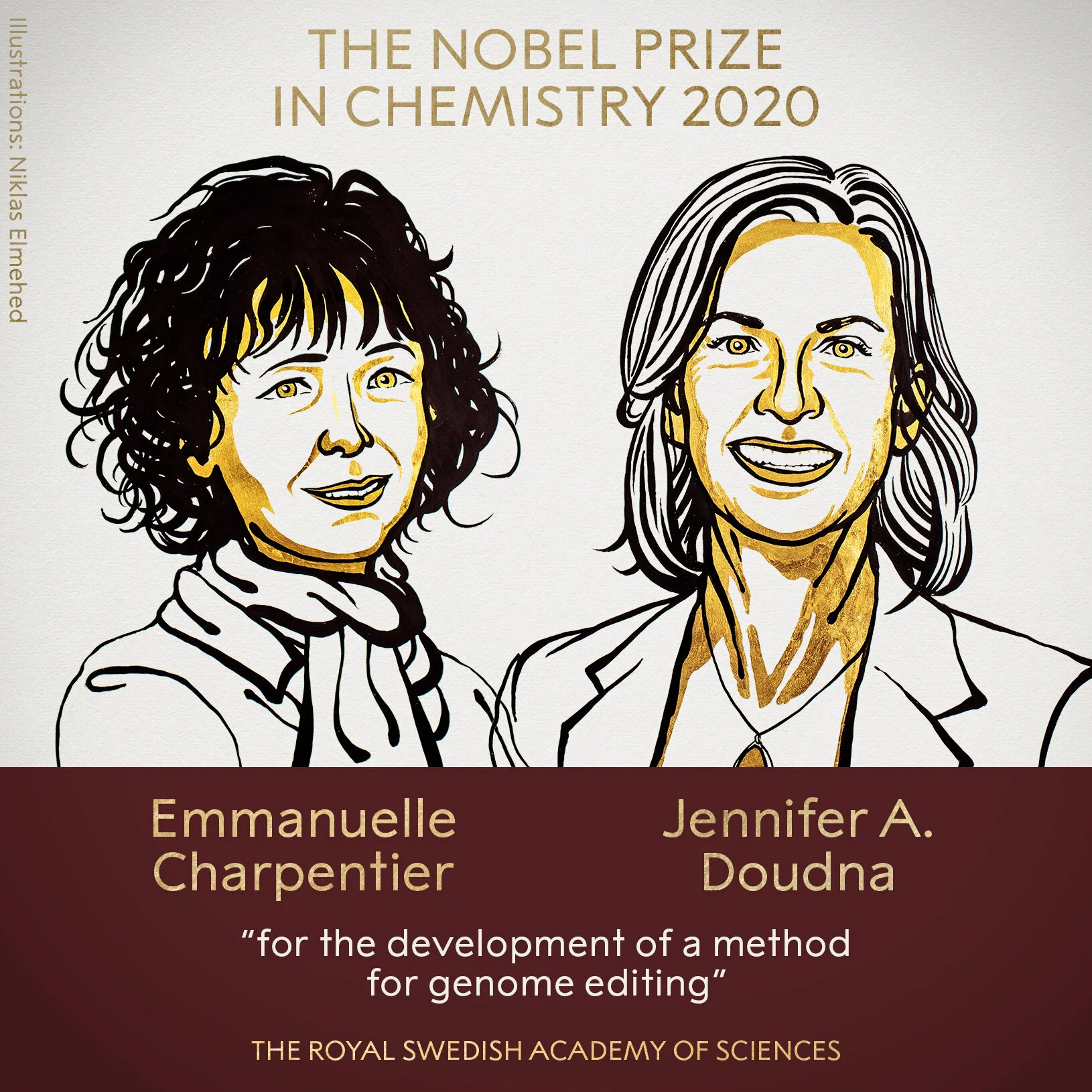
First - my unreserved congratulations to two amazing people, leaders in the field, and unquestionably deserving scientists. Second, it’s a little horrifying to realize how few women have won a Nobel Prize - this is now 6 in Chemistry? This is a celebration of a field and two luminaries within it, but - and while this is true of every Nobel prize, because this is ‘my’ field, I feel it particularly strongly - remember that science is collaborative and a team effort!
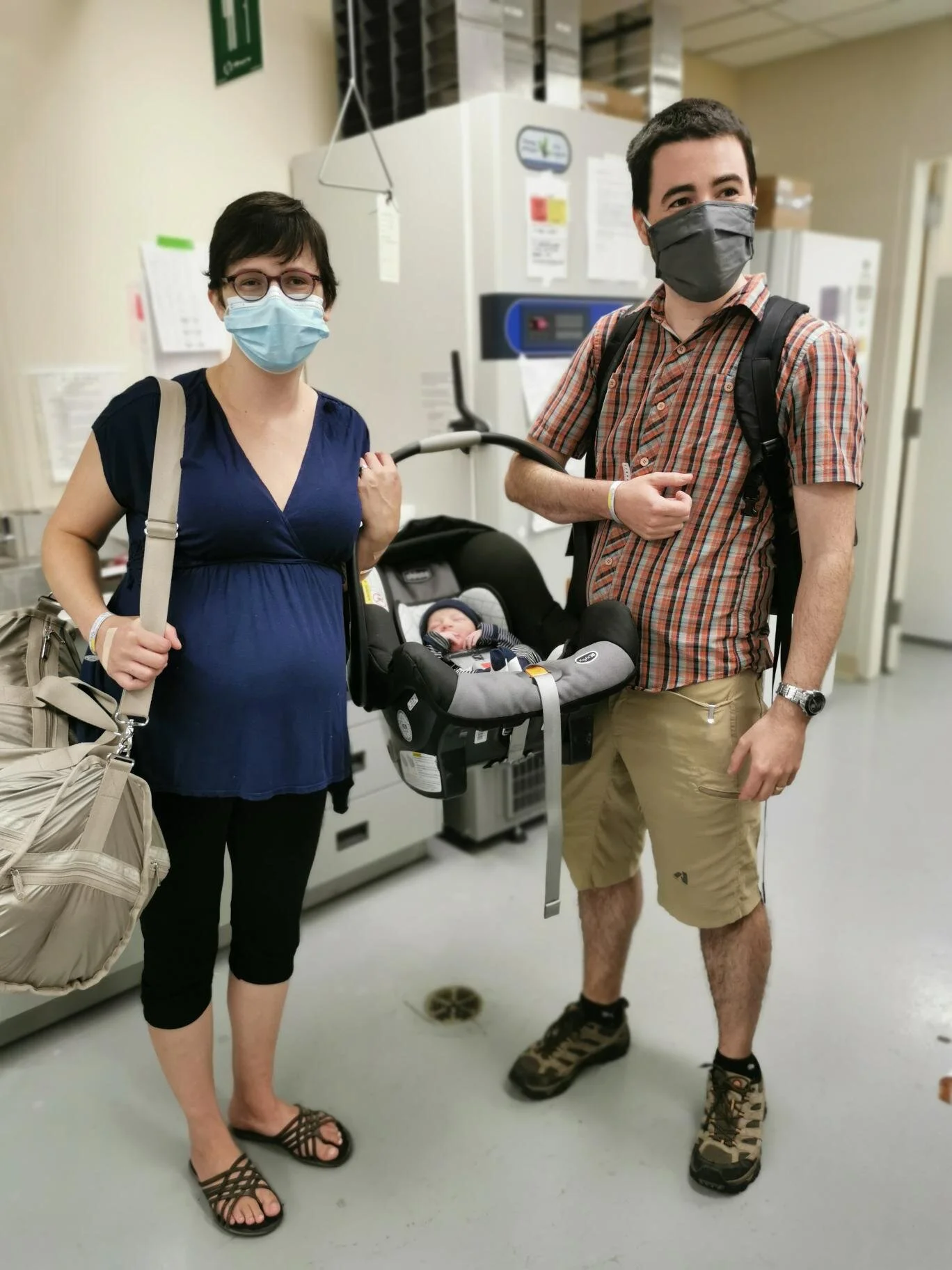
A quick post to welcome the newest Hynes lab member, Oscar, born Sept 2nd. He entered the lab at age 3 h 11 min, setting a new record, previously held by Liam in 2018, who was at least 12 h at the time. It is a bit weird to think that my home now contains more people (not counting the dog) than are allowed to be in my lab at any given time…
And with that, expect a gap in updates, delays in email replies, and all the other side-effects of parental leave.
While the pandemic is wreaking merry havoc with the lab’s capacity and workflows, we’re still delighted to welcome back Janice Tai, now as an MSc student in Biochemistry. Taking a step away from her undergraduate thesis work on Pseudomonas phages, she’ll be pursuing a crazy idea given form through a wonderful, hurried meeting between the Farncombe and APC Microbiome teams at an airport hotel in Heathrow. And you know this is going to be cool, because it involves building up some Baym-style megaplates.
Today, the lab celebrates the news of a new grant from the W. Garfield Weston Foundation. This is our first time interacting with the foundation, and some aspects of the feedback process were very refreshing! In short, this grant funds Tamina’s project in partnership with the Bienenstock lab at McMaster, to see whether prophages are contibuting to the ‘probiotic’ activities seen in cell-free preparations from probiotic bacteria. I’m extremely excited to see where this will lead us - I think the foundation, the reviewers and I are all very aware that if this early work pays off, it could have enormous implications!
Today marked the last of the four Phage Canada Symposia, this time on Phages Applied. With an exceptional team of trainees spanning UBC to MUN, and presenters from every lab that expressed an interest, I think I can call the first Phage Canada event an unqualified success. Now to figure out what form Phage Canada can take going forward!